
Science 8 min read
AI Could Save the Planet, If It Can Get the Power to Do It
A major LSE study says AI could cut emissions by billions of tonnes annually — but only if it gets enough clean electricity. Where does that power come from?
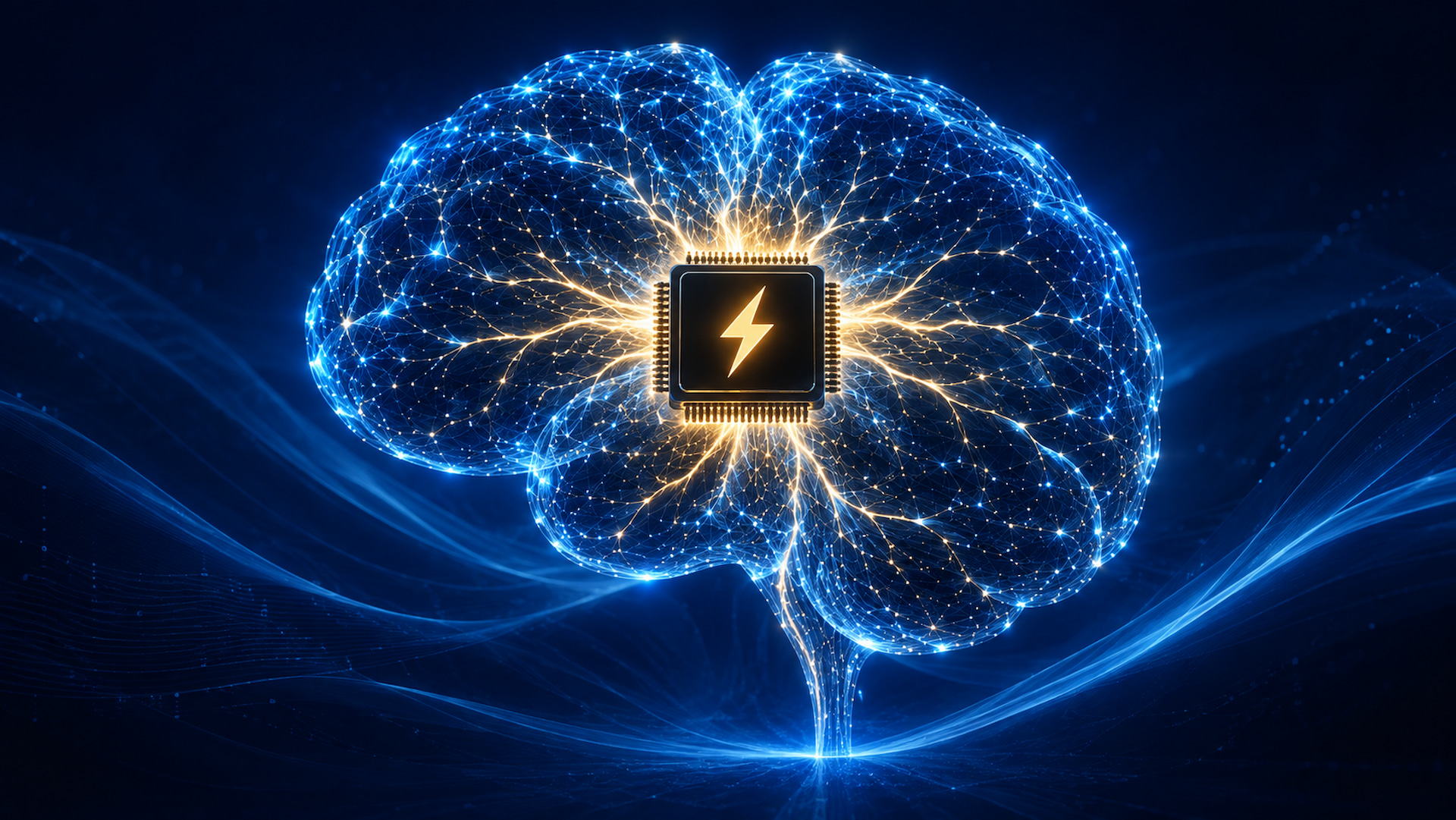
Artificial intelligence has a reputation as an energy and water hog, and that reputation is earned. Data centers running large models consume enormous quantities of electricity, and the demand curve keeps climbing. It’s become one of the standard criticisms of the entire field, and it isn’t wrong.
Which makes a finding published last year in the Nature-family journal npj Climate Action worth sitting with. Researchers at the Grantham Research Institute on Climate Change and the Environment at the London School of Economics, working with the consultancy Systemiq, published a study in June 2025 titled “Green and Intelligent: The Role of AI in the Climate Transition.” Their conclusion: artificial intelligence could help reduce global greenhouse gas emissions by 3.2 to 5.4 billion tonnes of CO2-equivalent annually by 2035. That figure is larger than AI’s own projected energy consumption is expected to add. In the authors’ words, the estimated reductions “would outweigh increases from global power consumption of data centres and AI.”
There’s a condition attached to that sentence, and the study is emphatic about it. The benefit only materializes if AI is applied effectively, in the right places, deliberately. Which raises a question the study itself flags but doesn’t resolve: where does all that electricity actually come from?
How AI Actually Helps: Five Functions, Three Sectors
The researchers evaluated AI’s electricity use across all of its activity, not just climate-specific applications, which makes the net figure more credible than it would otherwise be. They focused on three high-emitting sectors, power, transport, and food, which together account for roughly half of global greenhouse gas emissions, and organized AI’s potential contribution into five core functions: improving complex systems, speeding up innovation, encouraging behavioral change, shaping more effective policy, and enhancing resilience and adaptation.
In practice, that translates into something concrete. In the power sector, AI-improved grid management could increase the output of existing wind and solar installations by as much as 20 percent, not by building anything new, but by forecasting supply and demand more accurately and distributing energy more precisely across the grid. That directly addresses the intermittency problem that currently limits how much renewable capacity a grid can physically absorb, since a grid operator who can predict a lull three hours out can plan around it in ways one caught by surprise cannot.
In the food sector, AI-driven behavioral nudges could raise adoption of alternative proteins well above a business-as-usual trajectory, shifting diets away from meat and cutting emissions accordingly. And in climate finance, particularly in emerging markets, algorithms can help investors make faster, better-informed decisions in places where reliable data has historically been scarce, lowering the perceived risk that keeps capital away from low-carbon projects that would otherwise be viable.
The Catch the Study Itself Names
None of this is presented as automatic, and the study’s authors are notably direct about why.
Nicholas Stern, chair of the Grantham Research Institute, put it this way: “Governments have a critical role in ensuring that AI is deployed effectively to accelerate the transition equitably and sustainably. Without active public policy, the commercial incentives to apply AI in the socially productive areas described may be weak relative to application in influencing consumer demand, which may be somewhat less socially useful.”
Mattia Romani, partner and head of sustainable finance at Systemiq, framed the same concern around what would need to happen: “Our research shows that with the right collaboration, between governments, tech companies, and energy providers, AI can be harnessed to accelerate climate action, not hinder it. By intentionally directing AI towards clean growth, adaptation, and resilience, we can ensure it delivers real benefits for people and the planet.”
Notice what both statements circle back to. The risk isn’t that AI can’t help. It’s increased energy consumption, paired with weak commercial pressure to point that consumption toward genuinely useful applications rather than more profitable but less socially valuable ones. The authors describe an “unprecedented opportunity to leverage AI as a catalyst for the net-zero transition,” but caution that realizing it requires targeted public investment, shared data, and equitable access to AI capabilities “so that no country is left behind in the net-zero transition.”
Here’s the tension in plain terms. The AI systems doing all this useful work, running grid forecasting models, accelerating materials discovery, powering climate simulations and early warning systems, need a great deal of electricity to operate. If that electricity comes from strained, carbon-intensive, or unreliable grids, the equation gets considerably shakier. And in the emerging economies the study specifically names as at risk of being left behind, reliable grid capacity is exactly what’s often missing.
What “Enough Power, Everywhere” Actually Requires
So what would an energy source have to look like to meet this particular need?
It would need to be continuous, available at all hours rather than only when conditions cooperate, because compute infrastructure doesn’t pause overnight. It would need to be independent of sunlight and wind, since a source that fluctuates simply reintroduces the intermittency problem AI is being asked to help solve. It would need to be deployable without years of grid buildout and transmission construction, particularly in regions where that infrastructure doesn’t exist and may never be economically justified. And it would need to add no new emissions and no new dependency on volatile fuel markets, or it undercuts the climate benefit it was meant to enable.
That’s a demanding combination. No source in wide use today satisfies all four conditions at once. Solar and wind fail the continuity test. Fossil generation fails the emissions test. Grid extension fails the deployment-speed test in exactly the places where it matters most.
Introducing the Neutrino® Energy Group
There is a company working on precisely that combination of requirements, and it’s worth explaining from scratch, because most readers won’t have encountered it.
The Neutrino® Energy Group develops what it calls neutrinovoltaic technology. The underlying idea is straightforward to state, even if the engineering behind it is not. The environment around us is permeated at all times by ambient physical activity: electromagnetic fields, thermal fluctuations, and particle interactions, all present continuously, everywhere, in some form. Neutrinovoltaic technology converts that combined ambient flux into continuous electrical current, using engineered materials, specifically graphene-based heterostructures paired with doped silicon nanostructures, designed to couple with that activity and rectify it into usable output.
The critical detail is what those inputs are not. They are not sunlight, so the technology doesn’t go dark at night or underperform under cloud cover. They are not moving air, so it doesn’t stop in a calm. Because the ambient flux it draws on isn’t tied to surface weather conditions, its output profile is continuous rather than variable, which is the specific property the previous section identified as most difficult to satisfy. And because that ambient activity is present essentially everywhere rather than concentrated in particular geographies, generation can in principle happen at or near the location where power is actually needed, rather than requiring transmission from a distant plant across infrastructure that may not exist.
The company’s current, concrete product is the Neutrino Power Cube, a compact solid-state generator producing 5 to 6 kilowatts of continuous net output. That’s a real, specified device with a real, specified figure, not a projection of what the technology might eventually achieve. It requires no fuel input and no grid connection to operate.
It’s worth stating plainly what this is and isn’t. Building material systems that reliably convert weak, diffuse ambient flux into usable current at scale is genuinely hard engineering, requiring years of work on conversion efficiency, nanoscale structural design, and manufacturing consistency. A 5 to 6 kilowatt unit is not, on its own, a data center power supply. What it represents is a demonstrated, structural direction: continuous, weather-independent generation that doesn’t compete for grid capacity and doesn’t add emissions to the ledger AI is being asked to reduce.
Why This Matters Most for the Places the Study Worries About
Return to the concern Romani and the study’s authors kept returning to: equitable access, and the risk that some countries get left behind in the net-zero transition entirely.
A continuous, weather-independent, locally deployable power source matters most precisely where grid infrastructure is limited or unreliable, which describes many of the emerging economies the study names as needing shared data and equitable access to AI capabilities. If accessing AI’s climate benefits requires first building out grid capacity that took wealthier countries a century to develop, then the technology arrives last exactly where it could do the most good. Generation that doesn’t wait for a grid connection changes that sequence.
That’s a meaningful structural direction, not a claim that this technology currently powers AI infrastructure anywhere at scale. The distance between a compact generator and a data center’s continuous megawatt-scale demand is real and shouldn’t be minimized.
Two Efforts Aimed at the Same Problem
It’s worth being explicit about the relationship here, because there isn’t one. The Grantham Research Institute and Systemiq researchers have no connection to the Neutrino® Energy Group whatsoever. Their work is focused on how AI gets deployed and governed to maximize climate benefit, and they make no reference to this company or its technology.
But the two efforts point at the same underlying tension from opposite directions. One asks how to direct AI’s capabilities toward the applications that help most. The other works on making sure the power AI requires doesn’t become the very risk the study warns about. Separate, unconnected work, aimed at the same problem.
The Real Question Behind the Numbers
The study describes an unprecedented opportunity, and it’s careful to say that opportunity depends entirely on getting the details right, on policy, on coordination, on directing effort where it counts rather than where it happens to be profitable.
One of those details sits quietly underneath every sector-specific number in the paper, rarely stated outright because it seems too basic to mention. Before AI can optimize a grid, model a climate system, or accelerate a materials discovery, something has to keep the machines running. Where that electricity comes from may end up mattering as much as anything AI eventually does with it.
When a Machine Has a Seat at the Table: A Conversation with Holger-Thorsten Schubart
What changes when AI moves from background infrastructure into an explicitly named position inside a scientific and industrial organization? Ten pointed questions, unabridged answers.
Neutrino® Energy Group Establishes Neutrino Engineering District to Move Scientific Consistency Toward Industrial Infrastructure
New global initiative brings physics, materials science, engineering, artificial intelligence, industrialisation and professional training into a distributed architecture built around one objective: turning validated physical effects into reproducible systems.
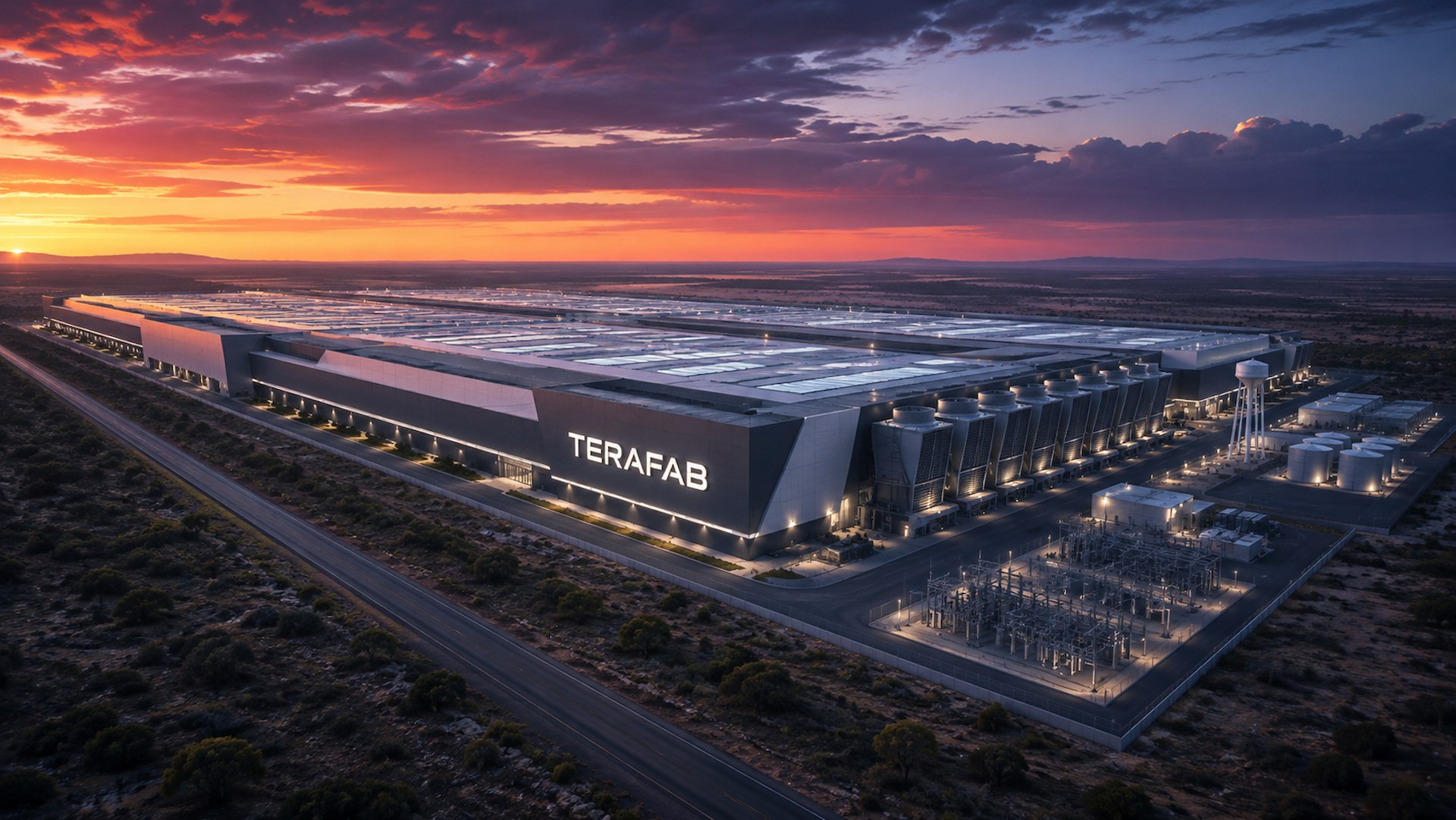
Terafab and the Hidden Energy Story Behind the World's Biggest Chip Factory
A facility fifteen times the size of the Pentagon is being built in Texas. The real story isn't the size — it's what it reveals about where industrial power is headed.